
Quick answer: Specify the surface material and the complete insulation construction separately. Aluminum foil and metalized polymer film are different material descriptions, even when both look silver. Neither appearance nor the surface name alone establishes the performance of a shipped payload.
Name the proposed surface precisely
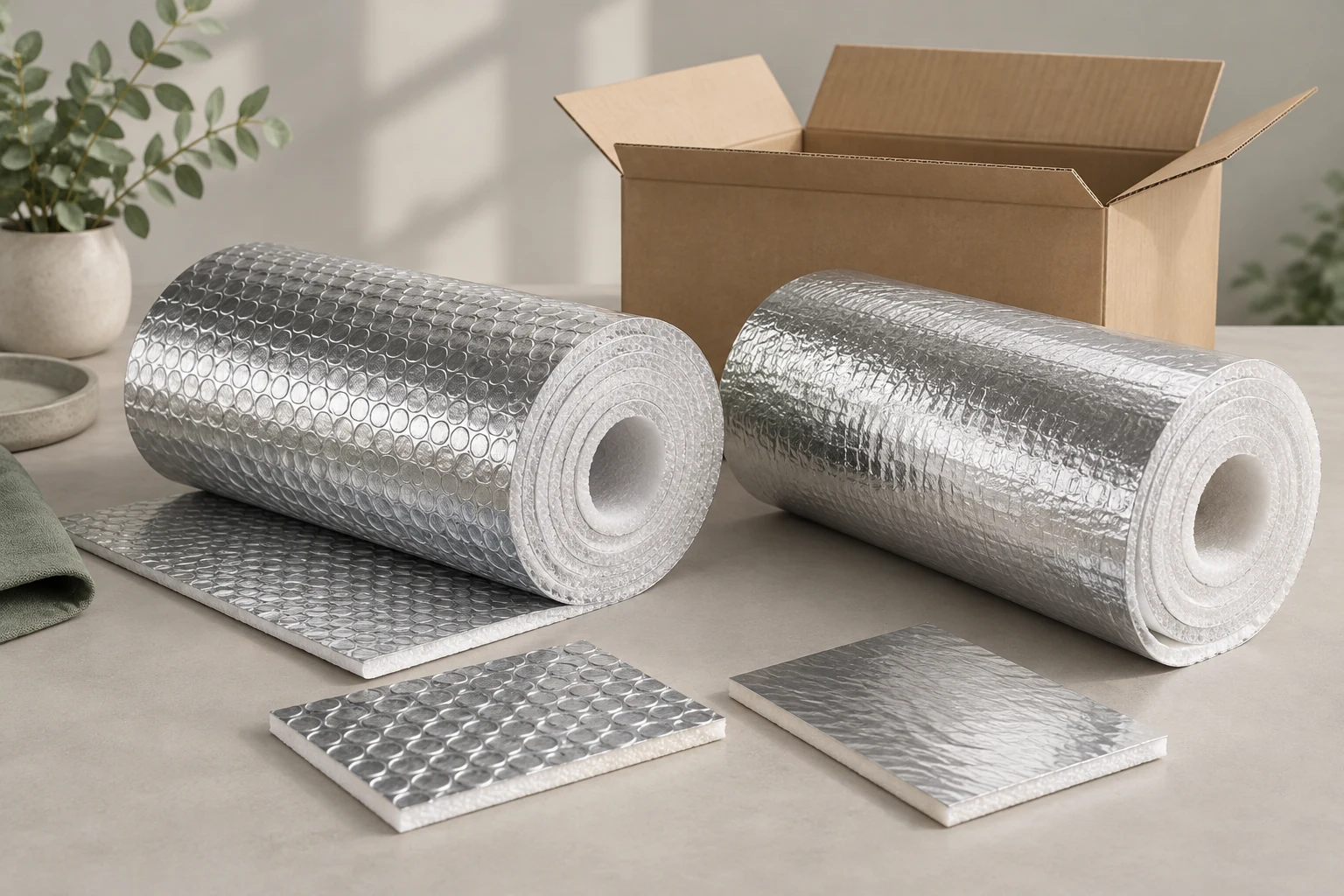
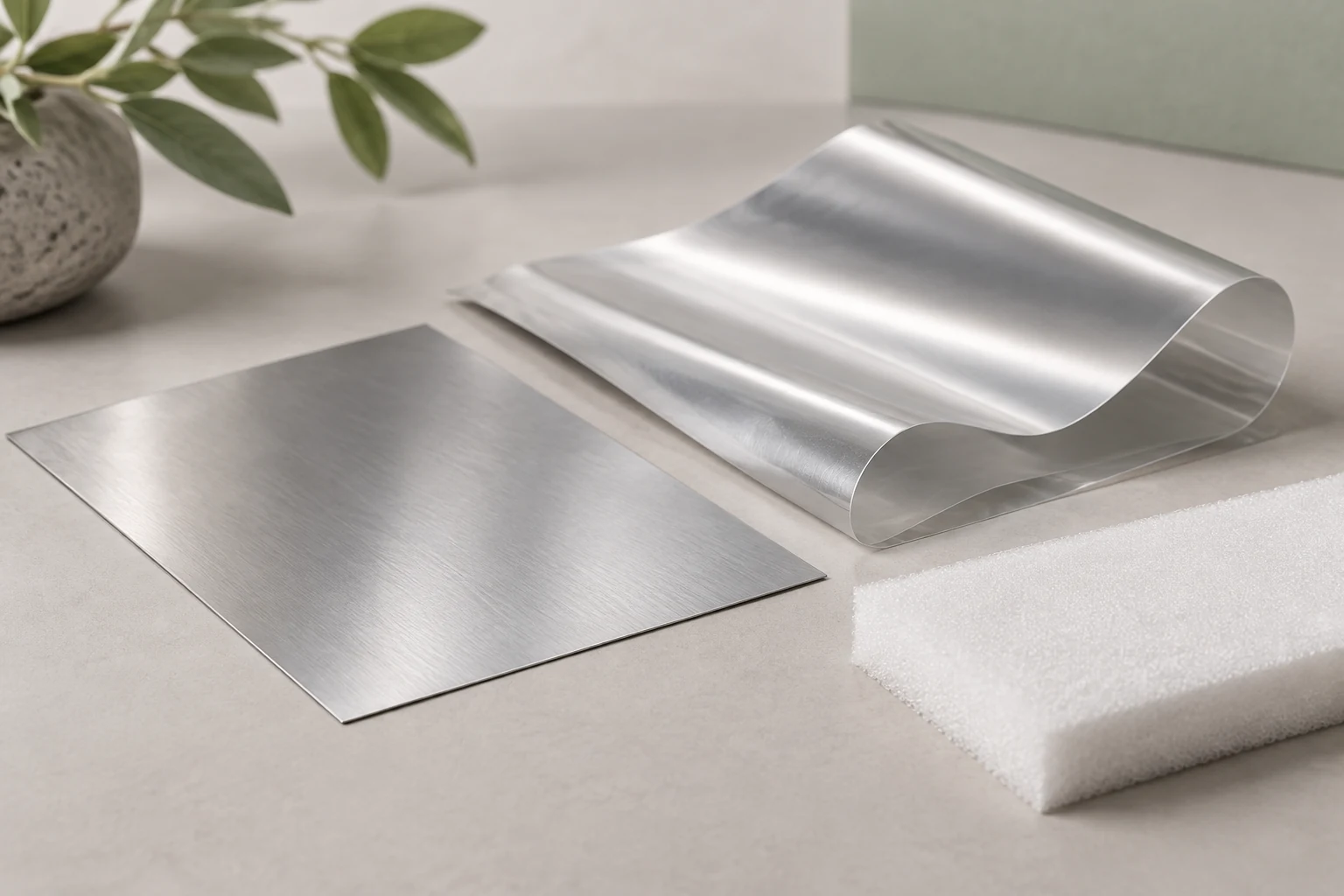
Ask whether the offered surface is aluminum foil or a metalized polymer film, and request the layer description for the selected construction. Keep the supplier’s terminology consistent in the quotation, sample and order. A photograph cannot reliably identify the material by itself.
New Solution lists aluminum-foil and VMPET-based options in its thermal material and cover families. These are alternative descriptions to clarify in an enquiry, not evidence that every order has the same layer thickness or performance.
Include the core and conversion details
Record the bubble or foam core, total thickness, surface layers, seams and closure. Identify whether the enquiry is for material rolls, fitted box liners or a cover over a loaded pallet. Different formats have different fit and conversion requirements.
Keep a complete drawing or structure reference with each offer. A quotation that identifies only a shiny outer surface is incomplete if the buyer also needs a specified core, edge treatment and opening arrangement.
Compare the finished packing arrangement
Review the liner in the intended carton or the cover over the loaded pallet. Check usable space, overlaps, corners and closure. If an alternative material changes thickness or flexibility, confirm that the same packing arrangement remains feasible.
Physical samples help identify fit and handling differences. They do not establish reflectance, barrier properties or shipping duration. Request relevant measurements separately and review their scope before including a claim in the purchase specification.
Tie thermal evidence to its configuration
Ask the cargo owner to define the temperature objective, duration and route conditions. ISTA’s thermal guidance discusses insulated shipping container qualification and parcel thermal profiles. Check whether the proposed evaluation fits the actual shipment format.
A material result and a complete pack-out result are different records. Identify the tested carton or pallet, payload and packing arrangement. Do not transfer a reported duration from one configuration to another just because both use reflective surfaces.
Prepare a material-specific enquiry
- Foil or metalized-film surface identification.
- Complete laminate and core description.
- Format, dimensions, seams and closure.
- Carton or loaded-pallet packing drawing.
- Cargo objective and evaluation requirements.
- Sample and supporting evidence references.
- Quantity, destination and order-specific terms.
Ask suppliers to list deviations from the requested construction. Approve an alternative only after the fit and required evidence have been reviewed, rather than accepting silver appearance as equivalence.
Frequently Asked Questions
Can I identify foil from a photograph?
Do not rely on appearance alone. Obtain the offered material and complete layer description.
Does one surface always provide a longer shipping duration?
No universal duration follows from the surface name. Review the complete configuration and relevant evaluation.
Should liner and pallet-cover offers use the same drawing?
No. Describe each format and its complete packing arrangement; review method scope separately.
Related Products and Guides
Read next: How to Specify Insulated Box Liners for Shipping.
Read next: Bubble vs Foam Box Liners: How to Prepare a Packing Brief.
Read next: Thermal Pallet Cover Receiving and Pre-Use Inspection.
Discuss Your Packaging Specification
Sources
Published by New Solution. This guide supports preparation of a purchasing brief. Product claims and suitability are confirmed against the selected order specification and supporting documents.
Illustrations show generic packaging concepts, not verified product specifications.