
Quick answer: A cushioning layer and an ESD requirement answer different questions. Specify protection from movement or impact separately from electrical properties and any moisture requirement. Ordinary bubble cushioning should not be treated as ESD-safe simply because it is used beside a shielding bag.
List the physical damage risks
Describe the packed item, its carrier, vulnerable edges and surfaces. Record which movements or contacts the packaging needs to control. If an insert or cushion is proposed, identify where it sits and how it changes the packed dimensions.
Ask the responsible team to choose an appropriate physical evaluation. A thicker-looking cushion does not establish the outcome for every item. Keep observations tied to the actual arrangement rather than using a material name as a universal protection rating.
Identify materials that contact sensitive items
The EOS/ESD Association discusses low-charging contact materials and packaging requirements. Ask the ESD owner to review materials that touch or surround the component. Do not substitute ordinary cushioning into a controlled arrangement without that review.
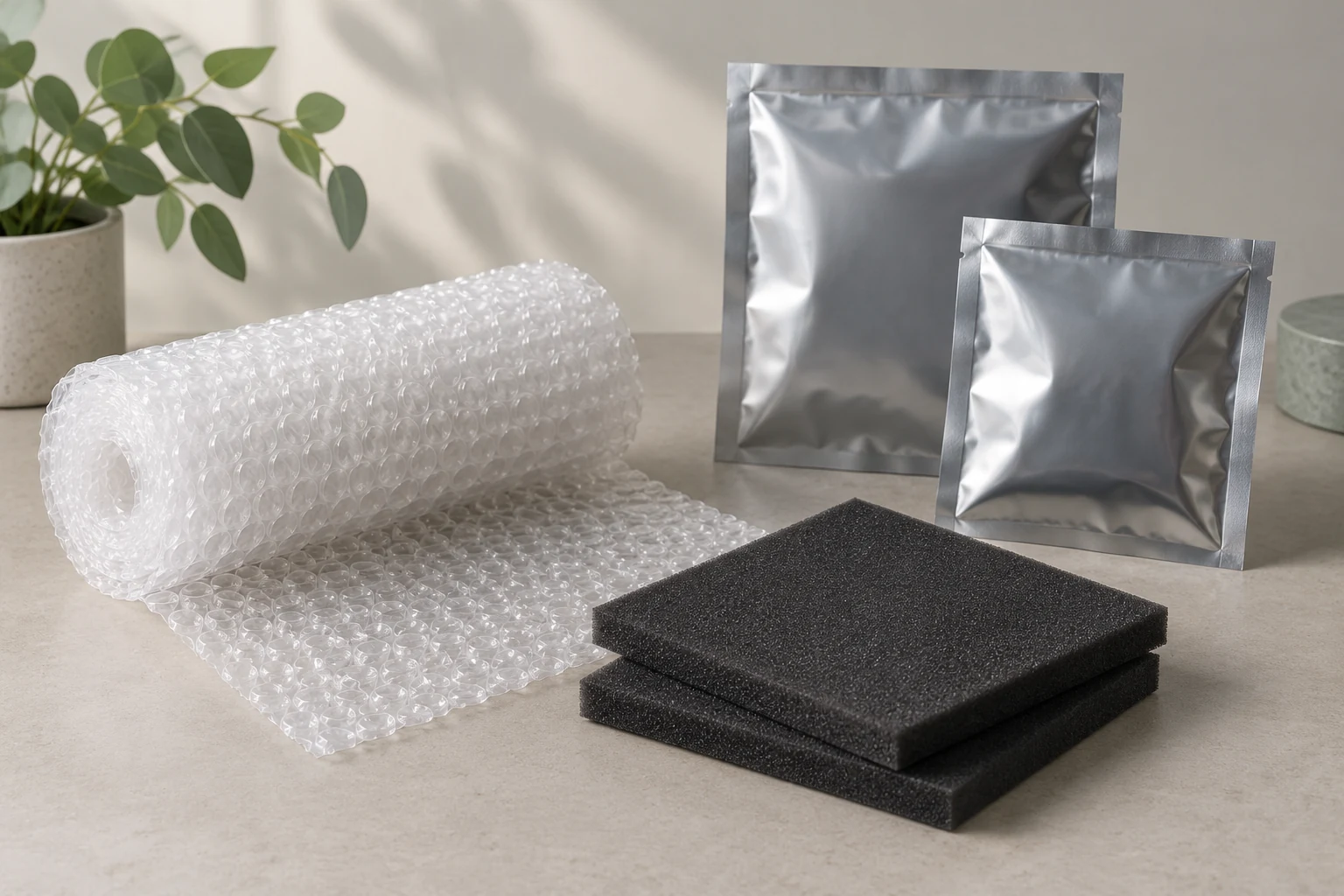
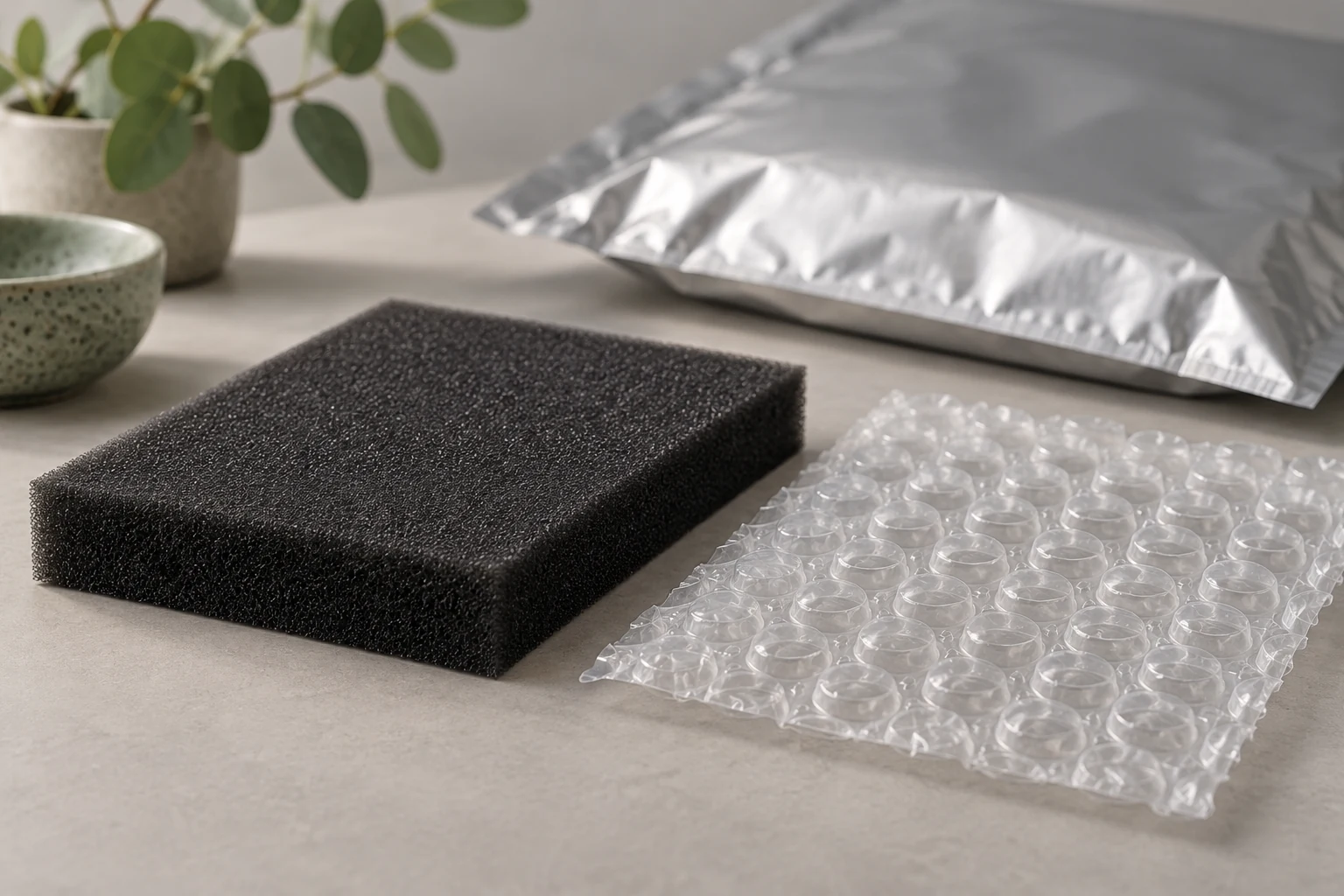
Bubble appearance, foam color and a metallic surface cannot establish electrical performance. Request the properties and applicable evidence for the selected construction. The concept illustrations here show materials to review, not approved ESD materials or a tested package.
Keep the layer arrangement explicit
Draw the item, carrier, cushion, bag and outer package in their intended arrangement. Note which surfaces contact each other, what remains inside the closed bag and where closure space is needed. A cushion can change fit or loading without changing the quoted bag’s nominal size.
Ask the supplier to explain the complete construction offered. A bag with a cushioning layer is not automatically equivalent to a separate shielding bag plus insert. The properties of the proposed system must meet the defined requirements.
Add moisture protection only where required
If the component needs moisture control, use its applicable instructions to specify the barrier bag and any approved accessories. Keep that requirement independent from cushioning and ESD properties. Do not infer a barrier rating from softness, thickness or silver color.
The New Solution barrier and shielding product pages help identify candidate families. Their listed format does not replace approval of the full packing arrangement, sealing process or accessory requirements for the selected component.
Use a combined approval sheet
- Item and carrier references.
- Physical protection objective and evaluation.
- Contact materials and ESD requirements.
- Cushion construction, placement and resulting dimensions.
- Bag, closure and separate moisture requirements.
- Sample, evidence and technical approval references.
- Quantity, destination and unresolved conditions.
Compare offers against this common sheet. Keep physical, electrical and moisture checks separate so a satisfactory result in one area does not silently stand in for the others.
Frequently Asked Questions
Is all bubble wrap suitable for ESD-sensitive parts?
No such assumption should be made. Have the responsible ESD team review contact materials and evidence for the selected arrangement.
Does foam color identify conductivity?
No. Request applicable properties and supporting data; color is not a test report.
Can one visual sample approve all protection requirements?
No. Physical fit and appearance do not establish electrical or moisture performance. Record the required evidence separately.
Related Products and Guides
Read next: Anti-Static Bags vs Static Shielding Bags: How to Choose.
Read next: Moisture Barrier Bags vs Shielding Bags: What to Specify.
Read next: ESD Packaging for Component Reels and Trays: An Enquiry Brief.
Discuss Your Packaging Specification
Sources
Published by New Solution. This guide supports preparation of a purchasing brief. Product claims and suitability are confirmed against the selected order specification and supporting documents.
Illustrations show generic packaging concepts, not verified product specifications.