
Quick answer: Inspect delivered pallet covers against the approved order specification and sample. Check identity, dimensions, seams and fitting before use, and keep questionable items for review. A visual inspection does not prove thermal performance or authorize an unspecified number of repeat uses.
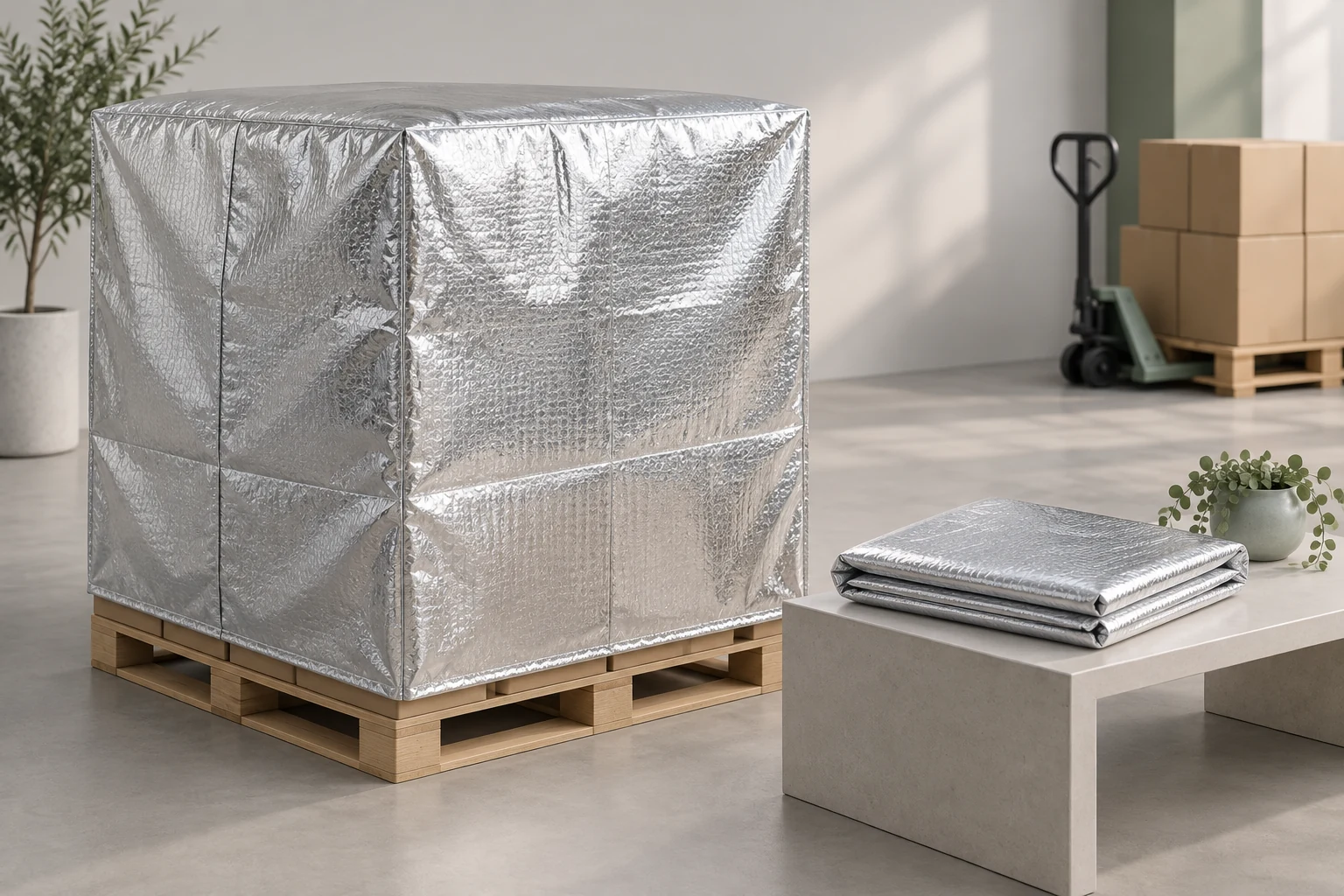
Identify the delivered specification
Match the delivery and sample reference to the purchase order, drawing and agreed construction. Confirm the surface, core and processing option rather than relying on a silver appearance. Keep lot or delivery references where required by the buyer’s traceability process.
Record an unexplained substitution as a condition for review. New Solution lists foil or metalized-film surfaces and heat-sealed or sewn processing options for covers; the accepted order determines what should arrive.
Check fit using the intended loaded pallet
Review the cover against the loaded length, width and height, including overhang and any corner protection. Confirm the opening, base overlap and fitting allowance in the drawing. A pallet base dimension alone does not establish cover fit.
Use the agreed sample or receiving method to review dimensions and physical fit. If the load arrangement changes, ask whether the selected cover still matches. Do not force an unsuitable cover over a load and treat that as a successful fit check.
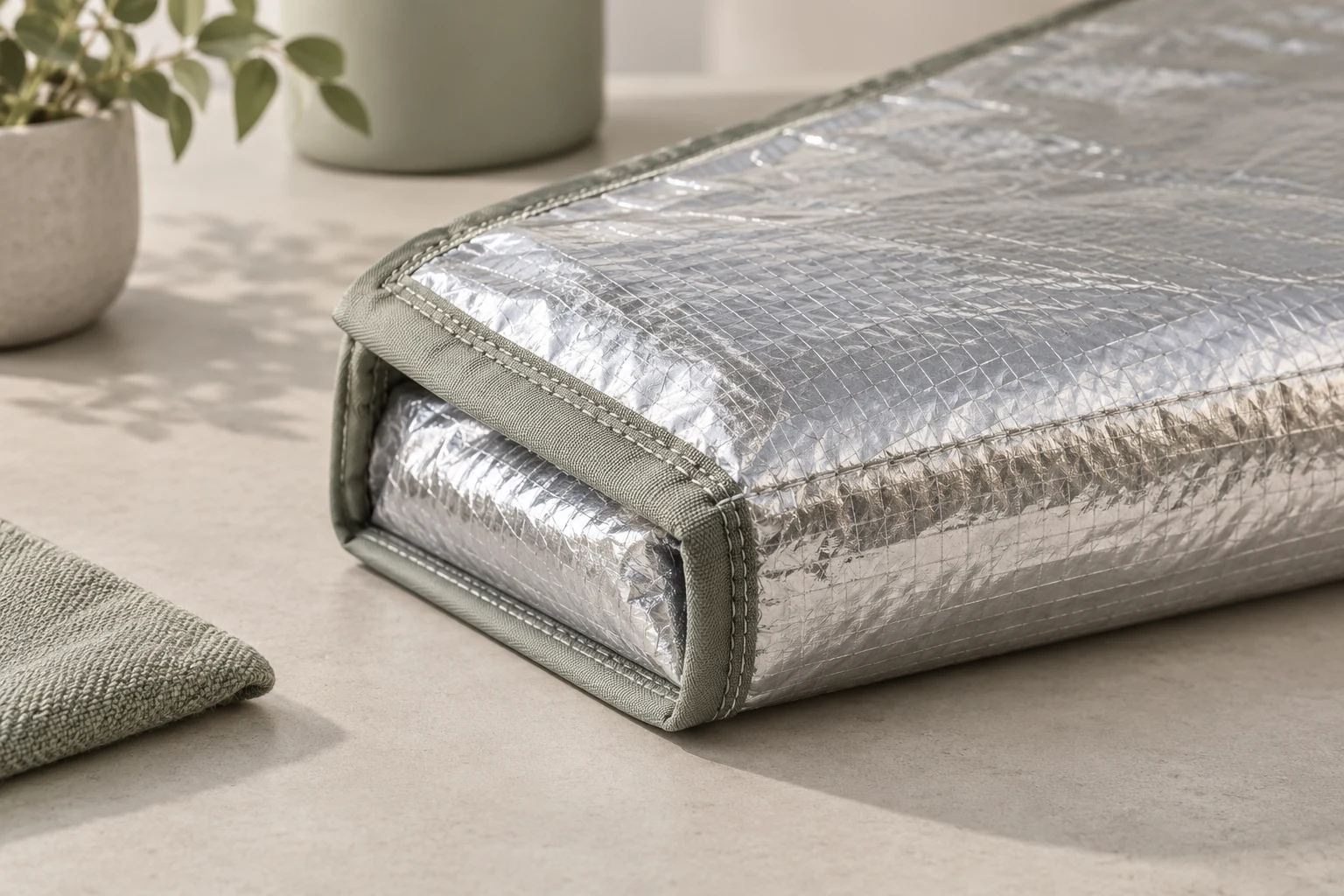
Record condition and seam observations
Inspect the surfaces, corners, seams, bound edges and closure for visible damage or differences from the approved reference. Record the location and description of an issue, and use photographs where needed. Keep suspect items separate for the responsible team’s disposition.
This is a receiving workflow, not a universal pass/fail standard. Agree tolerances and acceptance criteria for the order. Do not prescribe a repair or assume that a visual defect has no effect on the intended use without review.
Separate inspection from thermal and reuse approval
A visibly intact cover is not a thermal test result. ISTA’s thermal guidance addresses evaluation of complete packaging configurations. Confirm that any performance evidence relates to the intended covered load and route rather than another shipment format.
If repeat use is proposed, ask for the approved handling, inspection and retirement criteria for that construction. Do not assign a reuse count or cleaning process from appearance. Keep reuse approval and receiving inspection as separate decisions.
Save a practical receiving record
- Order, drawing, sample and delivery references.
- Material and conversion identification.
- Loaded-pallet configuration and fit observations.
- Dimensions, seams, edge and closure checks.
- Photographs and description of discrepancies.
- Disposition owner and unresolved conditions.
- Separate thermal and any reuse approval references.
Use the record to discuss a replacement, clarification or approved alternative with the supplier. Release items according to the buyer’s defined process, and review later changes in load, cover or handling before applying the same approval.
Frequently Asked Questions
Does passing visual inspection prove thermal performance?
No. Condition and fit checks are separate from the relevant performance evaluation of the complete shipment.
Can an intact cover be reused indefinitely?
Do not assume that. Obtain approved criteria and supporting information for any repeat-use process.
What should be done with an uncertain seam or dimension?
Record the discrepancy and keep the item for review under the buyer’s process. Do not invent a repair or acceptance limit.
Related Products and Guides
Read next: Thermal Pallet Covers: Sizing and Performance Checklist.
Read next: How to Prepare a Thermal Pack-Out Test Brief for a Shipping Route.
Read next: Aluminum Foil vs Metalized Film in Thermal Packaging: What to Specify.
Discuss Your Packaging Specification
Sources
Published by New Solution. This guide supports preparation of a purchasing brief. Product claims and suitability are confirmed against the selected order specification and supporting documents.
Illustrations show generic packaging concepts, not verified product specifications.