
Quick answer: Define coolant, payload, separation and packing sequence as one configuration. There is no universal coolant quantity or placement recipe for every lined carton. Agree the temperature objective and route conditions, then evaluate the complete pack-out before releasing it for use.
Define the payload and transport objective
Describe the item, its packaging, payload amount and arrangement. Record the temperature objective supplied by the responsible buyer and the intended transport stages, delays and receiving conditions. State the allowed configuration range rather than assuming a fuller or lighter carton behaves the same.
Separate a thermal liner or pallet cover enquiry from qualification of the shipment. A reflective surface or a neat arrangement does not demonstrate a holding time. Avoid assigning a temperature range or duration without relevant evaluation of the specified configuration.
Identify coolant and preparation conditions
Record the proposed coolant type, individual unit identification, quantity and preparation instructions supplied for the intended system. Ask the responsible technical team to approve these details. Do not substitute a different pouch, conditioning process or amount by visual similarity.
If the payload has limits on direct coolant contact, define the required separation and handling instructions. Treat leakage, contact and packing access as review questions. This guide provides no dosage, conditioning temperature or instruction for regulated goods.
Draw positions and packing sequence
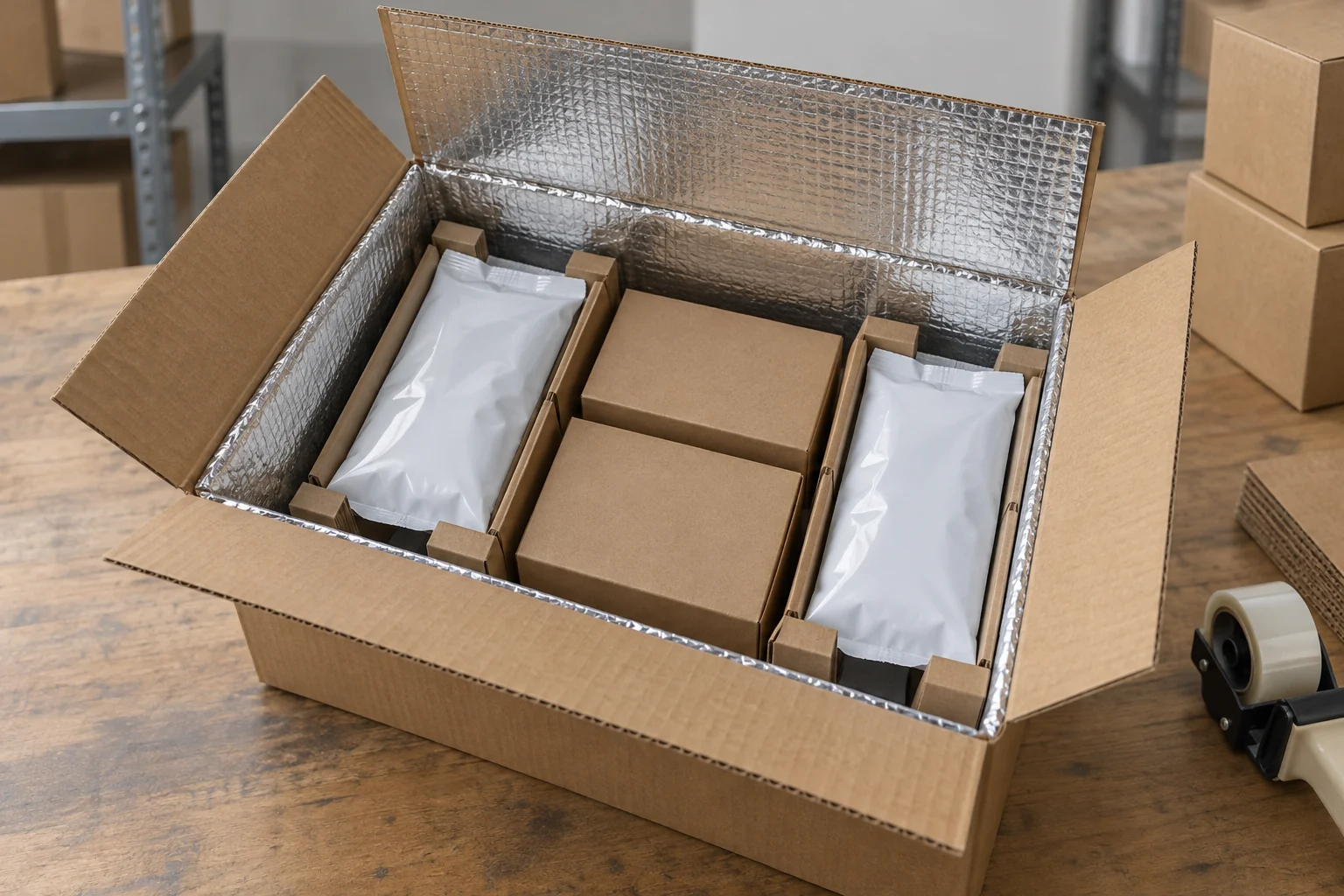
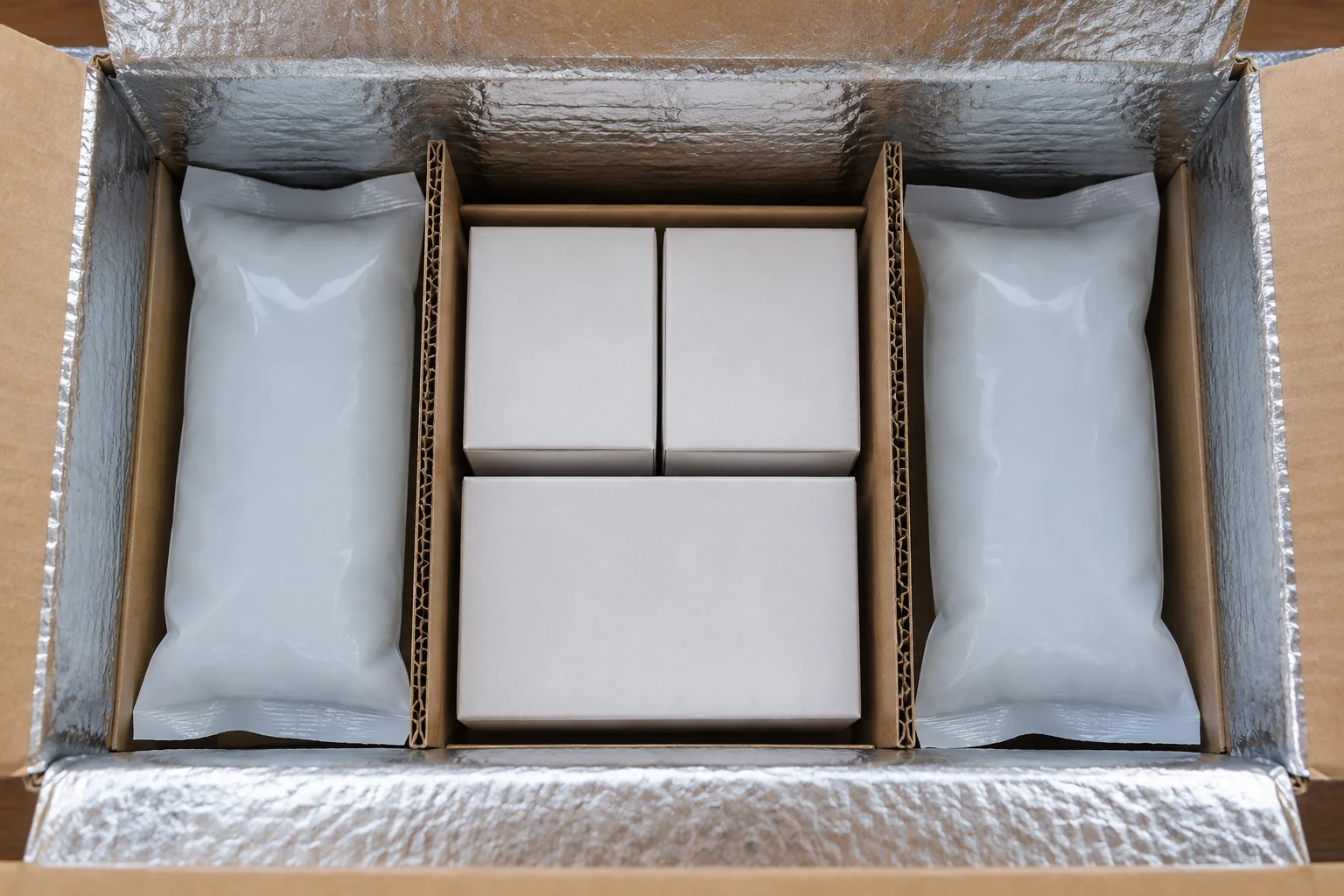
Create a drawing or photographs of the proposed layout showing payload, coolant, liner, spacers and closure. Identify orientation and which parts are installed first. Describe reserved space and any separation rather than relying on an informal instruction to put packs around the product.
Keep the record practical for the packing team: identify the configuration revision, approved components and final closure. The images here are generic concepts and should not be copied as a validated arrangement. Prepare your own record for the selected materials and payload.
Evaluate the complete configuration
ISTA describes design and qualification of insulated shipping containers and thermal profiles for parcel delivery. That is useful background for planning; a parcel profile is not automatically a qualification for every route or pallet shipment. Agree the appropriate evaluation with the responsible reviewer.
Record the tested configuration, payload, coolant preparation, exposure conditions, measurement locations and acceptance criteria. Compare the results with the defined objective. Where lined cartons travel inside a covered pallet load, assess the relevant complete shipment and handoffs rather than transferring carton evidence to the pallet cover.
Control changes after approval
- Payload identity, amount, starting condition and layout.
- Carton, liner and any outer shipment arrangement.
- Coolant identification, quantity and approved preparation.
- Spacers, contact restrictions and packing sequence.
- Route, exposure and receiving assumptions.
- Evaluation reference, criteria and reviewer.
- Configuration revision and change-control decision.
Review changes in payload, coolant, liner, carton size or route before reusing an approval. Keep a receiving record for discrepancies and escalate uncertain substitutions. No temperature performance or medical qualification is claimed for the illustrated system.
Frequently Asked Questions
Can the same coolant amount be used for every payload?
Do not assume that. Evaluate the defined payload range and complete configuration against the intended objective.
Does a thermal liner alone establish holding time?
No. Holding-time evidence needs the relevant complete pack-out and exposure conditions.
Can carton test evidence qualify a covered pallet shipment?
Not automatically. Review the complete load, transport stages and applicable evaluation separately.
Related Products and Guides
Read next: How to Specify Insulated Box Liners for Shipping.
Read next: Bubble vs Foam Box Liners: How to Prepare a Packing Brief.
Read next: How to Prepare a Thermal Pack-Out Test Brief for a Shipping Route.
Discuss Your Packaging Specification
Sources
Published by New Solution. This guide supports preparation of a purchasing brief. Product claims and suitability are confirmed against the selected order specification and supporting documents.
Illustrations show generic packaging concepts, not verified product specifications.