
Quick answer: Choose by the required ESD functions and handling environment, not by black or silver appearance. Conductive behavior and discharge shielding describe different properties. Define the buyer’s protection requirements and review evidence for the proposed finished bag before approving it.
Map where the component travels
List the steps from controlled handling through storage, dispatch and receipt. Identify when the item leaves the electrostatic protected area, often called an EPA, and who handles or opens the package. Ask the buyer’s ESD program owner to define the required protection at those stages.
ESD Association guidance describes low-charging conductive or dissipative packaging inside an EPA, with discharge shielding additionally required outside it. Apply the relevant program requirements to the actual workflow; a bag name alone does not establish suitability.
Compare properties rather than colors
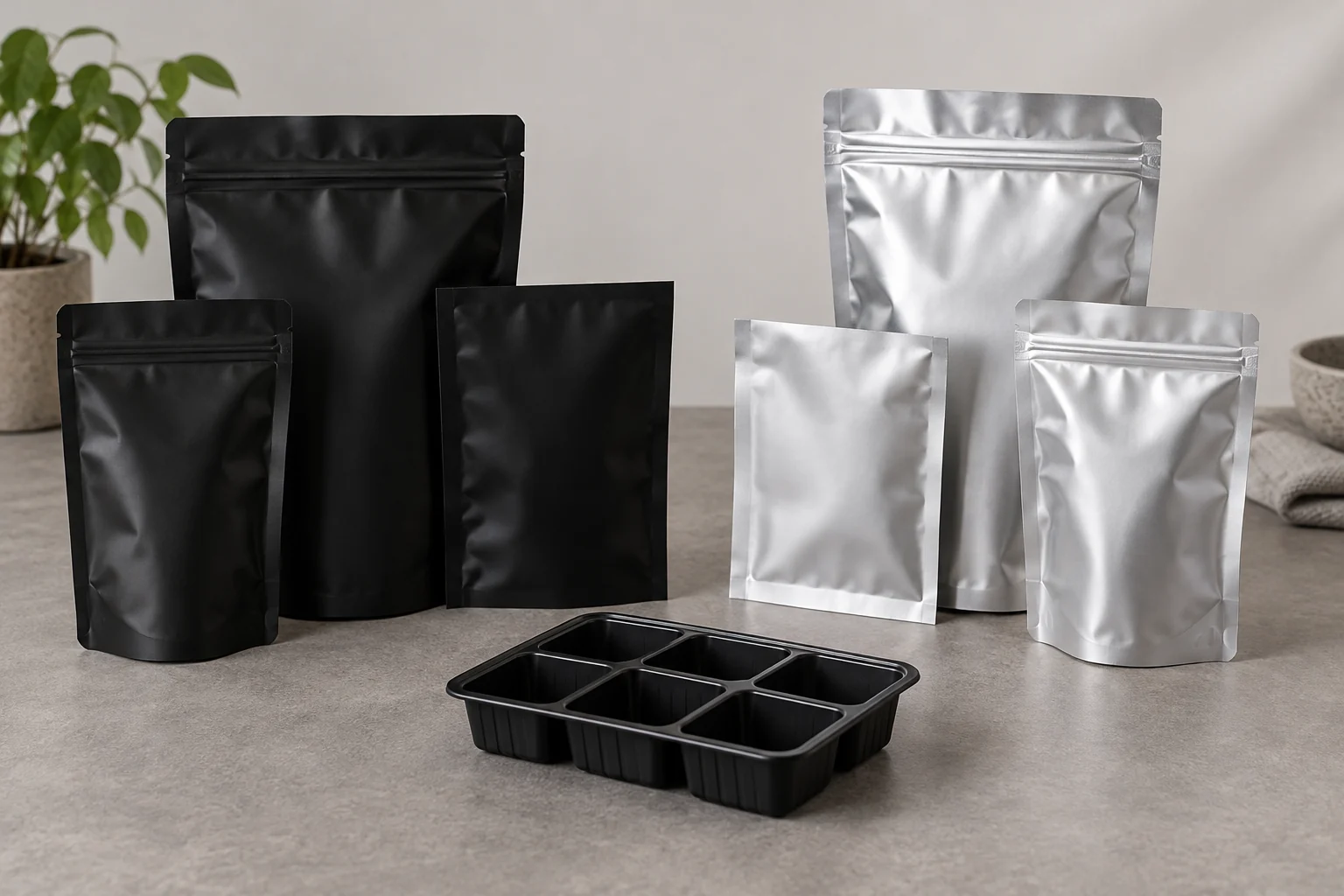
A plain black conductive bag and a metallic shielding pouch may look different, but color is not a measurement. Ask which electrical functions are supported and which reports identify the actual proposed material and construction. Do not assume that every black bag provides discharge shielding.
Likewise, a silver surface does not establish a qualified shielding package. Record the required functions separately and identify the evidence for each. This avoids replacing an engineering requirement with a purchasing shorthand such as black ESD or silver ESD.
Review the finished packaging arrangement
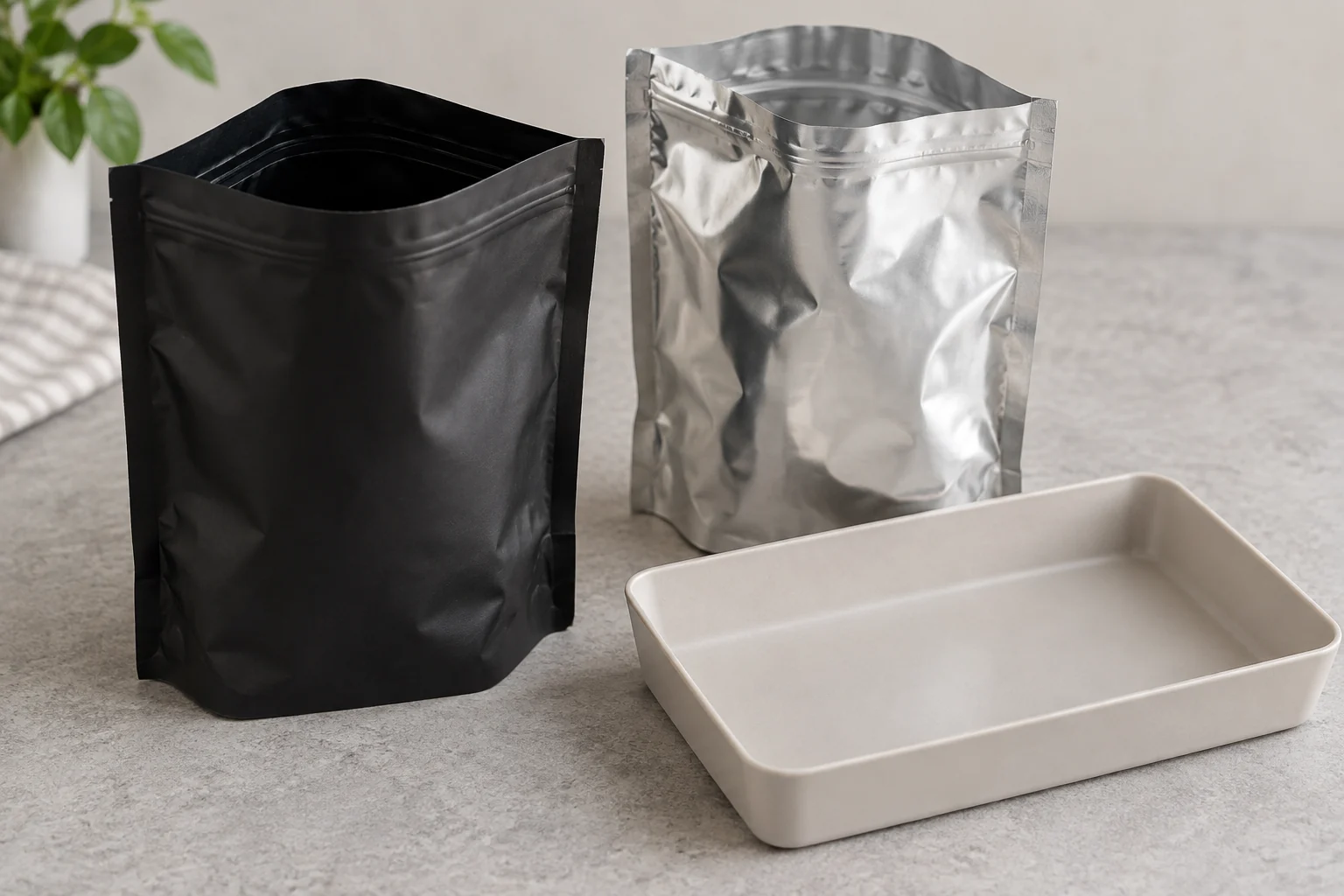
Check the component or tray, usable bag space, closure and insertion procedure together. Avoid a fit that forces the closure around protruding parts. Ask whether the proposed report and handling instructions apply to that finished arrangement.
Separate cushioning and moisture protection from the electrical review. Ordinary packing material can introduce another contact surface; ask the responsible reviewer about any insert used around ESD-sensitive items. Do not call a cushioning layer ESD-qualified from appearance.
Use a function-based comparison sheet
- Use stage: inside or outside the defined EPA.
- Required low-charging and resistance behavior.
- Required discharge shielding and applicable evidence.
- Finished bag, size and closure identification.
- Tray, insert and cushioning requirements.
- Separate moisture protection, if required.
- Approved handling and opening instructions.
Use the same requirements when comparing quotations. If one option has no evidence for a required function, record that gap instead of treating the options as interchangeable. Obtain technical confirmation before substituting a different family.
Approve and control substitutions
Keep the selected bag specification, report references and approved handling instructions with the purchase record. Ask how changes in material, converting, closure or inserts are reviewed. Check delivered identification against that approved reference.
New Solution’s shielding and moisture-barrier product families provide enquiry starting points. Conductive alternatives require their own order-specific confirmation. The illustrations compare generic appearances and do not demonstrate electrical performance or a tested client SKU.
Frequently Asked Questions
Is every conductive bag also a shielding bag?
Do not assume that. Conductivity and discharge shielding need review as separate required properties.
Does a silver pouch prove shielding performance?
No. Request applicable evidence for the proposed construction and required functions.
Can cushioning replace ESD protection?
No. Review mechanical protection and electrical protection separately, including the suitability of contact materials.
Related Products and Guides
Read next: Anti-Static Bags vs Static Shielding Bags: How to Choose.
Read next: How to Read an ESD Packaging Test Report Before Purchasing.
Read next: Bubble Cushioning and ESD Protection: Two Separate Packaging Decisions.
Discuss Your Packaging Specification
Sources
Published by New Solution. This guide supports preparation of a purchasing brief. Product claims and suitability are confirmed against the selected order specification and supporting documents.
Illustrations show generic packaging concepts, not verified product specifications.