
Quick answer: Specify the carrier and the required protection as one packing arrangement. Measure the reel or tray as it will ship, define the ESD handling environment, and check the bag and closure against that arrangement. Carrier color or bag appearance does not prove compliance.
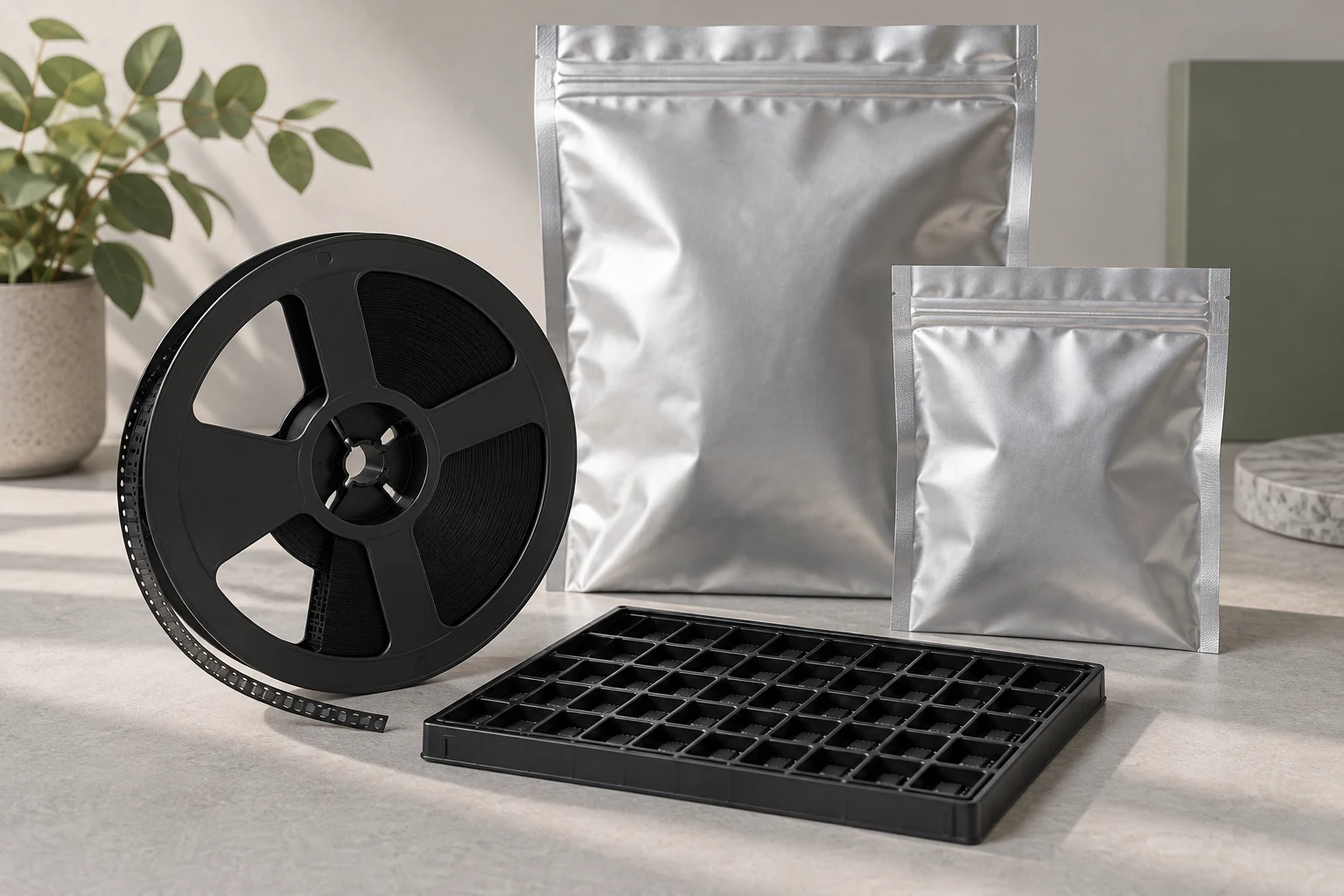
Describe the carrier configuration
Identify the reel or tray reference, its dimensions and the proposed quantity per package. For a stack of trays, include the approved stacking arrangement and any spacer or retaining feature. A catalogue diameter or footprint alone may not describe the packed height.
State whether different part references share one bag or must remain separated. Record the responsible technical instruction and traceability requirements. Purchasing should not invent a carrier loading arrangement for a sensitive component.
Define electrical and moisture requirements separately
The EOS/ESD Association’s packaging guidance distinguishes packaging within an electrostatic protected area from the additional shielding requirement outside it. Ask the responsible team to define the required properties and movement of this package.
If the components require moisture control, collect those instructions separately. A shielding description does not establish a moisture-barrier rating. A carrier described as ESD-compatible also does not automatically make every surrounding bag, spacer or closure suitable.
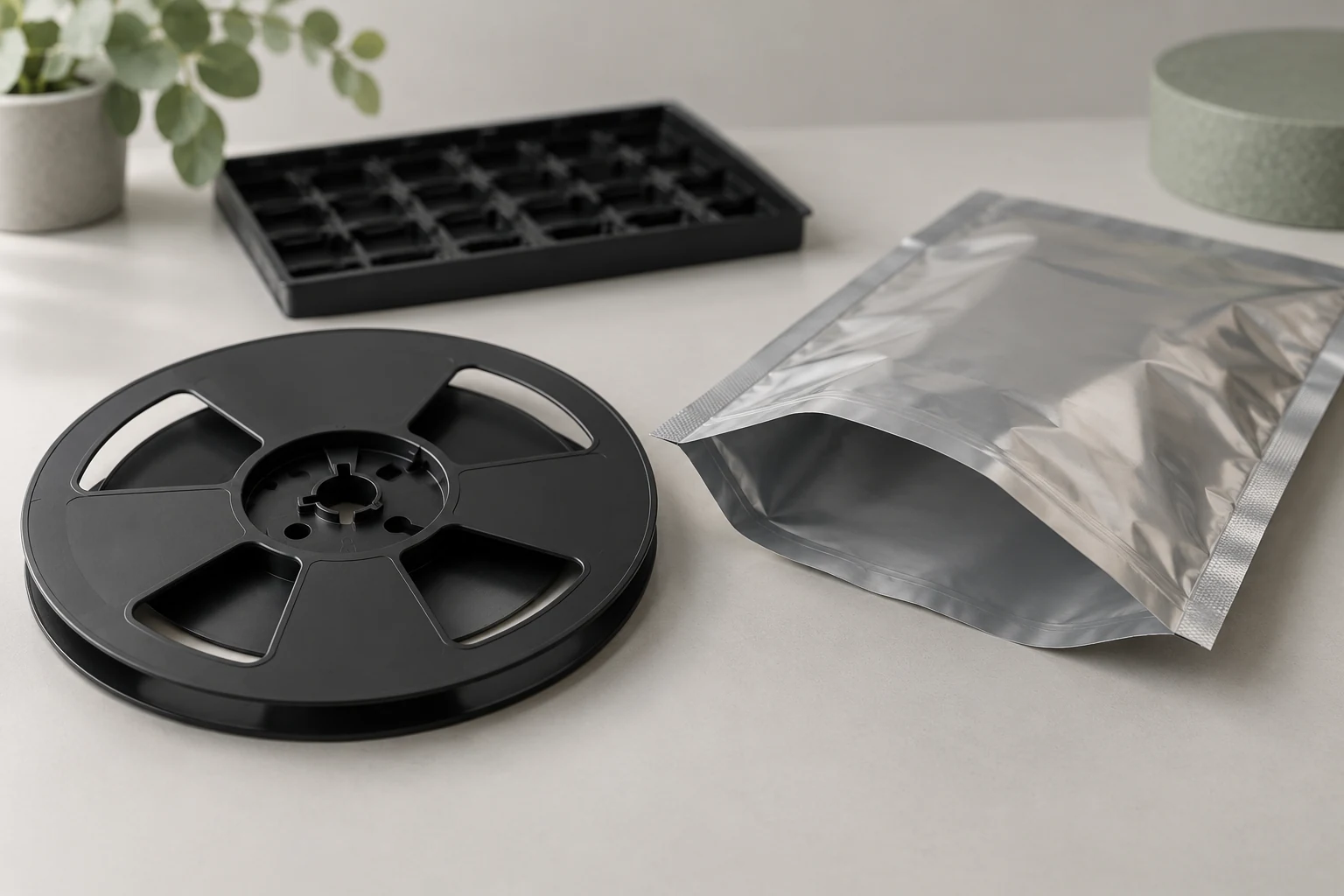
Review the complete bag fit
Prepare a drawing that includes the carrier’s packed dimensions, bag opening, usable space and closure allowance. Check rigid edges, stack movement and the position of the closure. Evaluate the selected carrier and sample together rather than choosing a bag only from nominal outside dimensions.
Ask how supporting data relates to the supplied finished bag and evaluated closure. New Solution’s shielding and barrier families are starting points for an enquiry; the precise construction and suitability must be confirmed for the carrier and requirement.
Keep packing access and labels usable
Explain who fills the bag, who receives it and whether it stays closed until use. Check whether part and lot identification remains accessible after packing. Agree where the approved label will be placed without interfering with the closure.
If the process includes opening and reclosing, ask the technical team to define the appropriate controls and evaluation. Do not infer an unlimited handling life from a zipper format. Fit and workflow observations remain separate from electrical or moisture evidence.
Request comparable offers
- Carrier reference and complete packed dimensions.
- Approved quantity, stack or reel arrangement.
- ESD environment and required properties.
- Separate moisture-control instructions, if applicable.
- Bag construction, usable space and closure drawing.
- Label, sample and evidence requirements.
- Order quantity and destination.
Ask suppliers to state what their offer includes and which requirements remain open. Approve the selected arrangement through the responsible technical team before treating an alternative bag as an equivalent substitution.
Frequently Asked Questions
Is reel diameter enough to select a bag?
Include packed height, any retaining arrangement and closure allowance as well as diameter.
Can a black carrier prove ESD performance?
No. Appearance is not evidence. Obtain the relevant carrier and complete-package requirements and supporting information.
Does shielding also prove moisture protection?
No. Specify and support the two requirements separately.
Related Products and Guides
Read next: Static Shielding Bag Closures and Usable Dimensions.
Read next: Dry-Packing Enquiry Checklist: Barrier Bags, Desiccant and Humidity Indicators.
Read next: Bubble Cushioning and ESD Protection: Two Separate Packaging Decisions.
Discuss Your Packaging Specification
Sources
Published by New Solution. This guide supports preparation of a purchasing brief. Product claims and suitability are confirmed against the selected order specification and supporting documents.
Illustrations show generic packaging concepts, not verified product specifications.